garypacker010's pick · Updated September 2026
HP Chromebook 14 (14a-na0226nr)
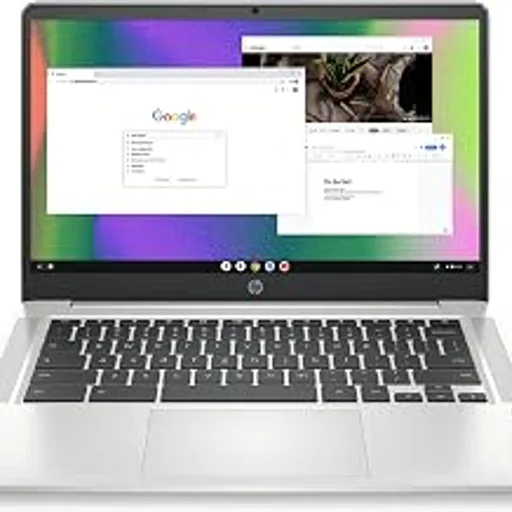

The HP Chromebook 14 may suit someone who wants a light, simple laptop for browsing, email, schoolwork, streaming, and other basic day-to-day tasks. It is the kind of machine that makes sense when portability, easy setup, and a low-maintenance operating system matter more than raw power or heavy local storage. For a shopper comparing options in the Chromebook category, the appeal here is the familiar 14-inch size, the thin design, and the promise of long battery life in a package that stays focused on everyday use.
The main reason to consider it is that Chrome OS keeps the experience centered on web apps, cloud storage, and quick sign-in. That can be a good fit for someone who mainly lives in a browser and does not need full desktop software for editing, gaming, or large local projects. The listed Intel Celeron N4120, 4 GB of RAM, and 64 GB of eMMC storage point to a modest configuration, so this is better read as a practical school-and-home laptop than a performance machine. If the buyer wants fast multitasking, lots of open tabs, or heavier software, it is worth comparing this model against something with more memory and storage.
One thing to verify before buying is whether the screen, keyboard, and port selection match the way the laptop will actually be used. A 14-inch HD display can be a comfortable size for travel and casual use, but buyers who want sharper text or more workspace may want to check the panel quality in person or read detailed display notes. Storage is another point to confirm. 64 GB on a Chromebook can work well if most files live online, but it may feel tight if the user expects to keep many downloads, photos, or offline documents on the device.
The evidence here is limited to the listing details, so the right approach is to read this as a fit guide rather than a performance report. The combination of a thin chassis, Chrome OS, and modest internal hardware suggests a straightforward laptop for light workloads, and that is useful if the goal is to keep costs and complexity down. It is less compelling if the buyer expects a do-everything computer or plans to keep a lot of local files. Looking at battery life claims, display reviews, and real-world speed reports would be the smartest next step.
In the end, this Chromebook may fit students, casual home users, or anyone who mostly needs a dependable browser-first laptop with a portable shape. It is not trying to be the fastest or most expandable option. It makes more sense for buyers who value simplicity and basic everyday use, and who are comfortable checking the limits of storage, memory, and display quality before they decide.
Amazon product links on this guide are not currently affiliate links. Neither garypacker010 nor Buyer Field Guide earns an affiliate commission from them.
See current price